Saturday, November 13, 2010

Salvation City

Sigrid Nunez' book about post-pandemic life in the midwest mostly made me want to wash my hands. A lot. Salvation City opens its arms and hearts to Cole, a 14-year old left orphaned after the big flu pandemic hits, but the book Salvation City isn't really about the pandemic or the panic or the flu. It is more of the struggle within Cole as he tries to reconcile is atheistic, scholarly parents--now deceased-- and his own upbringing with his new-found life among evangelical Christians. Still, I recommend sitting near some hand sanitizer as you read. It'll just make you feel better.

What I loved most, besides the great writing (and the squeaky clean hands) was that Nunez' Pastor Wyatt (PW to Cole) is neither a monster nor a god. He's a human being when such a character could be ripe for caricature or parody. Nunez makes Cole himself determine his path while never forcing him to reject one way of life for the other. The people who want to adopt him are good, good people, even if PW's wife isn't really intelligent enough to truly homeschool Cole. (Yeah, home schooling doesn't come off that well). And the community itself never did fall into the looting and terror that other areas suffered. In many ways, Salvation City really is a sanctuary, in spite of its obsession with the rapture. It's easy to see in post-apocalyptic times why one would believe that the end is near. Throw in advanced climate change, news from the "outside" world as falling apart, and even the stories Cole brings from his Dickensian orphanage days. Everything is tilted on its side so that even a simple camping trip can be fraught. Danger is everywhere, but hope lies somewhere. It's no wonder there's an obsession with so-called rapture children (They mostly seem blond to me, a lay person)

Nunez skirts around the disaster that many other author's would have chosen to embrace. The world hasn't ended--there's still email, electricity (if occasionally spotty), food, community spirit, a functioning government. But she gives hints that even the best planning for a pandemic was only good for a few weeks and the glimpse of what the big cities might still be experiencing, away from the safety of a religious community shimmer in the periphery of the novel. At this point, I gave up washing my hands and hoped for the best.

And this is a hopeful rather than despairing book. It is not a particularly religious book either. It is not an us against them look at survival. There is no one way, no one true path. Instead, it's Cole's chance to come of age, instead of stagnating in the aftermath of a deadly flu. It's a book that is sadly saturated with death, but it's not the end of the world, even if the rapture-ready narrate it.

Sunday, November 7, 2010

Joe College

It's hard to fathom just how weird college life is until you've had some distance from it. When you're immersed in it, it's either the most awesome time in your life or the scariest, depending how well you assimilate. I mean, think about it, when else are you going to be surrounded by the smartest, most beautiful people, all in the prime of their lives, all your own age, all thrumming with youthful energy. Yeah, sure, some people have to work through college, some people are terrible at studying and that's stressful, but, hey! For the first and last time in your life, you have 24 full hours in a day to do what you need and want to do (that's thanks to the youthful energy).
There's also some weird stuff--like trying to reconcile your home life with your dorm life, your hometown persona with your masquerade as a smarty who actually does belong at, say, an Ivy League, but that's where great fiction is born.

Tom Perrotta (best known for Election and Little Children) must have been my current age when his novel Joe College was published and I cannot get over how well he captures what it's like to be, in his case (and his protagonist's case) at Yale in 1982. Danny is a classic middle class, New Jersey boy who gets plucked from his weird little suburban cul-de-sac life, and dropped into the equally weird world of higher learning. Oh, there's no question he belongs there intellectually, and certainly we don't meet him until his junior year so he's assimilated. Still, you can take the boy out of New Jersey, but you can't...well, you know. Back home, Danny drives his dad's Roach Coach luncheon wagon from one office park to the next. Back home, there are the weird little home-meals of bland middle America food, there's his father's pending hemorrhoid surgery, there's the secretary-league high school classmate whom he dates and then mentally dismisses among his Ivy League friends (not in the mean way that sounds). There are also some things more specific to New Jersey that contrast to Yale as well. Danny runs afoul of a gang of lunch truck thugs (only in NJ), replete with baseball bats, and Mafia-like leaders. I know New Haven has a bit of a run-down element, but I don't think it's quite the baseball bat, smashed headlights kind of run down that Danny meets back home. The description of the gang is priceless. Where Vito Senior [natch, they're Italian American] seemed avuncular and basically good-hearted, tired in a seen-it-all sort of way, Junior just looked puzzled and mean, like he suspected you were going to put one over on him sooner or later and wanted to wring your neck before you got a chance to do it.

It may seem that an Ivy League education insulates you from the rougher edges of the world, but it turns out that being brainy and privileged in one town, doesn't mean you can avoid getting beaten up (and having your lunch money stolen, as it turns out) in another town. You also don't get to avoid the sticky business of sleeping with a girl you don't have a future with, especially if it seems you are her future. That's real life versus college life.

And of course, Ivy League life brings its own oddities--Danny has wealthy friends who would prefer not to be, or they play at being poor, or they lie about who they really are because they know they can't possibly live up to their parents' expectations. Danny's parents are more or less stunned by Danny's college life while trying--poorly--to hide their bewilderment. Danny thinks of them occasionally when suite conversations turn so utterly from the real world. [I] was thinking of my parents, and the way my life sometimes seemed to embody their worst suspicions about college. Was this what they'd scrimped and sacrificed for all those years? So their son could spend his Tuesday nights drinking beer, smoking dope, eating weird food, and learning to see the assassin's side of the story [in this case, the guy who shot McKinley]?

Perrotta captures the bizarre late night discourses, the feeling that everyone else is in on "it" and somehow you're not, the anxiety of the first time you are told to mark up a text book--or worse, a novel (very strange, if you've gone to public school all your life) and the utterly uniquely collegiate phenomenon known as the a cappella singing group. No, I know there's a cappella in the 'real' world, it's just that there's a strange obsession and posession each student seems to have with their school's a cappella group. Perrotta might as well have been describing my own college's (male) group when he says, Resplendent in their formal wear, the Whiffenpoofs stood in a semi-circle in front of the nonfunctional fireplace, crooning "Surfer Girl" for their captive audience. One of them was black, one Asian, one short, one both short and prematurely bald; the rest looked like close relatives of Vice President Bush. And yes, they do the weird antics like dropping trou to reveal Hawaiin shorts, etc... The Whiffenpoofs have a pretty big role in this book, or at least, they pop up just as they do throughout one's college career.

Danny figures out his life, more or less, as one must with graduation looming. He doesn't always do the right thing and sometimes he just seems to skate along, but as he himself admits--after not getting his head bashed in by Junior--that sometimes he's just lucky. I think that's the point--you escape by luck from your middle of the road life and find yourself at Yale (or similar schools) and from there on, it can seem as if your life is touched by magic. That's kind of why some pay so much for a higher education. It's not the class work, it's the connections you make. I just enjoyed this foray back into that time, without my having to do the work or the sleepless nights.

Monday, October 18, 2010

The Widower's Tale

I've had trouble reading lately. Not because I don't have tons of times on my hands, but because Julia Glass' latest book, The Widower's Tale, was so absorbing, I wanted first to savor it and once I'd finished reading it, I found it hard to move on. This isn't really about a widower, exactly. I say that because I have a widowed friend who won't even touch a book with such a title. Yes, Percy Darling is a widower, has been for 40 years, and perhaps hasn't fully come to terms with his wife's death, but this book is more about the people around him than any personal sorrows he still harbors over Poppy's death.

I was struck again at how well Glass does in portraying such a variety of characters, how believable her gay, thirty year old preschool teacher is alongside 70 year old Percy. She also captures well Percy's 20 year old grandson and his dubious roommate, and the the landscaping illegal immigrant and various others. She must have taken my criticism of her last book very seriously indeed, when I felt she'd totally failed to capture a spry 90 year old in I See You Everywhere.

That's not to say I bought everything. I really didn't believe in Percy's late romance--not just because of the age gap, but perhaps because I simply didn't like the object of his affections. No, she didn't grow on me. Celestino, the illegal immigrant had a whiff of the "noble savage" to him which I found vaguely troubling and a little condescending, but I liked his character and his story line, so I forgive.

I appreciated the sense of danger that grandson Robert's roommate at Harvard brought to the picture with his extreme environmentalism, all while wishing to strangle him for throwing figurative monkey wrenches in Robert's well-laid plans. The characters are what drive this book, and they all revolve around Percy, recently retired librarian (at Harvard's Widener). I always like a literary host to any gathering and Percy fills that in spades, making witicisms, even when uncalled for, and gadding about his wealthy, landed gentry town. He agrees to rent his barn to a unfortunately named preschool--Elves and Fairies--while expecting to maintain his privacy and routine. The first thing to go, of course, is his habit of swimming naked in his pond. That is only the first of many of his habits to fall and at first it seems Percy will fail at retired life. He has events and people thrust upon him at uncomfortable regularity, but he's no true curmudgeon after all. He just plays one to the choir and meddles when he can. He is a good father to his very different daughters, a good friend and mentor to those who need it, and in the end, he holds the future of many in his still-capable hands.

The Widower's Tale does offer a sense of endings and sadness, as befits its title, but it's not of death or absence. It's more that the choices we make in life become our story.

Wednesday, October 13, 2010

What to read while proctoring state tests

October is a really tough month at work because my day is spent watching kids fail at the required state tests. Sometimes I'm allowed to read parts of the test to them, but most of the time, I have to sit beside them and (supposedly) cheer them into doing their best on tests that are overwhelming and meaningless to them, but very much a component of what funds my job.

So, yeah, sometimes I read at work.

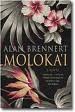
I started reading Alan Brennert's Moloka'i which is a novel about the leper colony on one of the islands that eventually became Hawaii. This was my book club assignment and I was intrigued because it wasn't something I would ever pick up. Confession: I have serious issues with books that have a lot of bodily fluid talk in them. I suppose that makes me a bit of a prude, but there you have it. The only thing I remember about Salman Rushdie's Midnight's Children is that the protagonist had a big nose that was always oozing something or other. So much for a masterpiece. Obviously a book about leprosy was going to be a challenge.

Actually, the oozy bits and sloughed off body parts weren't the problem in this book and I forged ahead. In fact, I almost finished it, but I thought the writing was pretty bad. The author couldn't decide on a point of view so there were vertiginal swoops from one character to another, sometimes within a paragraph. I kept going because the story was definitely intriguing--the life and times of a 7 year old girl sent away to live on Moloka'i when leprosy was considered a dangerous and infectious disease. Parts of this life were fascinating and parts were, frankly, quite dull. After awhile I didn't care anymore. Plus I was stuck in a small, windowless room with kids failing to read the word "mechanical" and so unable to help pass a test that essentially funds my job. I needed something more light-hearted than leprosy.

Fortunately, my office is next to the school library, so between tests, I picked up a copy of Roderick Townley's The Blue Shoe, which is on this year's Great Stone Face Award. The subtitle of The Blue Shoe is A Tale of Thievery, Villainy, Sorcery, and Shoes, and it was fantastic. I read 3/4 of it while "working". I've only read three of the books on this list, but this one's a clear winner. Hap Barlo is a gifted thief, sent to do hard time on a distant mountain full of evil humans and angry blue-faced Auks (dwarf-like characters). He is doing penance for feeding a beggar in his home town--begging being a criminal offense. As the narrator puts it--and it's an intrusive narrator--Did I mention that the poor were arrested in Aplanap? They were. Well, beggars were arrested. You could be poor all you wanted and you'd be left alone. But if hunger forced you into the streets to beg for a coin, large men would come and cart you to jail, and from there, they'd ship you to the north side of the next moutnain, a peak so tall its top was perpetually covered in snow and surrounded by swirling clouds.

Hap doesn't really mind being sent to the mountain, as he hopes to reunite with his formerly-begging father, but it is a bad place. Eventually, aided by the love of his thirteen-year-old life, some Auks and the women who love them, some luck, and some magic, Hap sets things right, while showing up the obnoxious mayor and his wife. The mayor gets a great description. The narrator flatly refuses to say his name--claiming it is unpronounceable--but lovingly describes the scary wart on his brow that helps keep the villagers in line. Imagine what is wife--Ludmilla the Large is like. All the characters are amusing and well-written so that's half the treat. The ending is disappointing, but I guess most kids' books are that way. Definitely The Blue Shoe is a great escape if you're ever stuck doing some mind-numbing work that depresses you to boot.
I like to think I'm inspiring the testing kids to read more and therefore pass the test next year.

In the meantime, I've moved back to the adult world and onto Julia Glass' excellent The Widower's Tale. More on that when testing season is over.

Wednesday, September 29, 2010

The Cellist of Sarajevo

We have famously short-term memories as a culture. This is why political ads work so well. We forget that it was the other guy that put us where we are today. But being stupid about the recent past isn't supposed to apply to me so it was with increasing embarrassment that realized how little I remembered about the Bosnian conflict as I devoured Steven Galloway's excellent book, The Cellist of Sarajevo.

Galloway himself admits his book isn't thoroughly accurate and the reader is left with little information about the conflict or its roots. What he offers instead is a profound look at life in a modern war zone. I had to keep reminding myself that I wasn't reading about WWII and that I had watched some of this on television, in a very recent lifetime.

The book is divided by point of view. We are introduced first to the cellist, a man finally so devastated by the senseless killing around him that he vows to play Albinoni's Adagio in G Minor for 22 days straight at the site of the most recent massacre. Galloway bases this character on a real person so you get a whiff of authenticiy. As the cellist begins his vigil, we are introduced to three other characters-Kenan, a father and husband just trying to get drinkable water to his family (an odyssey in his wartorn city), Dragan, a pensioner, trying to get his daily bread (literally), and Arrow, the sniper recruited by the "defenders" of Sarajevo to take out the "aggressor" snipers targeting civilians throughout the streets. Each chapter begins with one of these characters highlighted while the other names recede into a grey type. I loved this detail, even though it wasn't that difficult to keep the characters apart, a real gift from an author. The visual was just a nice way to begin a chapter.

After months of watching their beloved and beautiful city become ruins--a city hitherto best known for its role in the start of WWI--it comes down to this: Each character daily weighs what might keep him or her alive. If you're dressed as a penguin, is a sniper more or less likely to choose you as target? Kenan contemplates this very thought as he runs with his water canisters strapped to his back, Do the men on the hills tend to shoot at people they find funny, or spare them? If the person who crosses the intersection before you is killed, do you stand a better or worse chance of making it across? What if the sniper misses? Is he having a bad day, or is he playing with you? And, in the Arrow the sniper's case, she wonders, is she a killer or a defender? And what is she defending, exactly? In the end, the character of Dragan phrases it this way: Is the real Sarajevo the one where people were happy, treated each other well, lived without conflict? Or is the real Sarajevo the one he sees today, where people are trying to kill each other, where bullets and bombs fly down from hills and the buildings crumble to the ground?

Author Galloway begs his characters to find and keep their humanity while their lives have become little more than those of scurrying rats. The few animals--dogs mostly--who appear all seem strangely more settled by this new world of danger, while the humans themselves are regressing. The question is, will one cellist's work and stubborness be enough to remind them all of where they've come and who they truly are? And will we the readers pay attention long enough to remember that humanity exists even under the most savage conditions.

Sunday, September 26, 2010

The Imperfectionists

It turns out that if it takes me more than a week to read a (relatively short) book, there's a good chance I'm not enjoying that book. Sadly, that's what's been holding me up. I was stuck reading Talking to Girls about Duran Duran. I thought I would love that. I mean, DURAN DURAN! I wasn't as crazy a fan as friend Heather in junior high, but I had all the posters on the wall and in my locker that my meager allowance offered. Plus, it promised to be a pleasant romp through memory lane of that 80s music that more or less formed me. Turns out, not so much. Just couldn't get into it.

Enough about badness and on to the book that I devoured in two days: Tom Rachman's The Imperfectionists. The story is told by different characters, all working at an international newspaper based in Rome. Each story is a little bit depressing, but it's all set in Rome so you're willing to put up with a bit of dissatisfaction on the part of the characters because you can't beat the gig. That's pretty much how they feel about their lives, too. One character even realizes that the reason he's with his younger, very attractive girlfriend is that he can offer her a nice apartment in Rome in which she can sit around. He says he can't imagine she'd give him the time of day in a cheap apartment in Boston, for example. As difficult as their jobs might (or might not) be, each character seems to realize the luck or the allure of their current positions, even as they angle to do more than say, write obituaries. Each character has a sad little experience or awakening, even if it's not as tragic as the one that befalls the obituary writer, Arthur Gopal, and each story is neatly turns us back to the office.

My favorite character is probably Herman Cohen, partly because his awakening is more positive than some of the others and partly because he's chief copy editor who's internal publication (called Why?) collects all the misspellings and errors made by the writers over the week. I relish that little detail and can relate to it while being grateful that I don't work with such a nitpicker myself.

I did skip one chapter, the one on Winston Cheung, the Cairo stringer, because I could sense it was going to be the sort of chapter that would haunt me, leave me feeling sorry and responsible for this young man's failures. I'm sure it's good, but it's not for me. The revenge chapter towards the end was brutal but kind of fitting, and one I'm sure a lot of randomly down-sized employees could enjoy. I did kind of regret that there wasn't some big bringing together everyone chapter at the end, though there is closure, of sorts. I was just left wanting a little more.

The book is really a collection of glimpses into the slow decline of newspapers in general, but it's a nice little ride. It reminded me a bit of season 5 of HBO' s The Wire, the one that focused on the newspaper in which you got all the personalities, the grasping aspirations of the individual journalists, their realization that they cannot transform lives or their city merely through print, and finally, the end of the newspaper as they know it. That was one of The Wire's strongest seasons, and Tom Rachman's The Imperfectionists, follows a similar path, in a very different manner. And in spite of the negatives, it still made me dream of living abroad and writing for a living. Just maybe with a bit less personal drama and fewer things going wrong.

Wednesday, September 8, 2010

The Information Officer

Apparently I'm reading about small islands in the Mediterranean, specifically during wartime. In the wake of Sadie Jones' Small Wars, I picked up Mark Mills' The Information Officer which taught me a lot about Malta, a country I'm not sure I could have placed with any degree of confidence just a week ago. This is a different war and different place from Smith's Cyprus novel. Also it was a different style and genre.

As if the story of a small island being bombed to bits (in spite of the Maltese and their "indominable spirit") during WWII didn't offer enough drama, Mills drops in a couple of murders, a psychopath, and hints of secret and secretive agents. In some ways I liked that the war was "just" a backdrop to every day matters (such as murder) because it fit along with the image we have of Malta, a country that has apparently resisted one onslaught after another. The Germans are the current attackers in this book, along with the apparently half-hearted Italian neighbors, but it's also (as in Smith's Cyprus) the British presence that is causing some of the trouble.

As in any mystery, I became extremely paranoid about every character, including the protagonist, Max, who is the titular propagandist for the British. He's a nice character and interesting in a dull, heroic way, but no one was safe from my suspicions once "sherry girls" start getting murdered. In a mystery, it can go one of two ways. Either it's the obvious bad guy and it's just a matter of why and how, or it's out in left field, a sort of the-butler-did-it scenario. If you're lucky, the author brings you along for the ride whichever way he or she chooses to go. I wasn't totally satisfied with the killer in The Information Officer. I suppose authors who choose to "surprise" you almost have to write the early chapters as if they have no idea who the killer is, but then it's hard to accept the result. I guess I like hints, though Mills is decent enough at red herrings--as I said, I became suspicious of everyone--but I'm not sure I'm convinced by the results.

Still, The Information Officer was a good glimpse into a country I knew nothing about, a good example of life in wartime, and the writing was good so I'd probably read another book by the author.